
What is a PCAOB Audit?
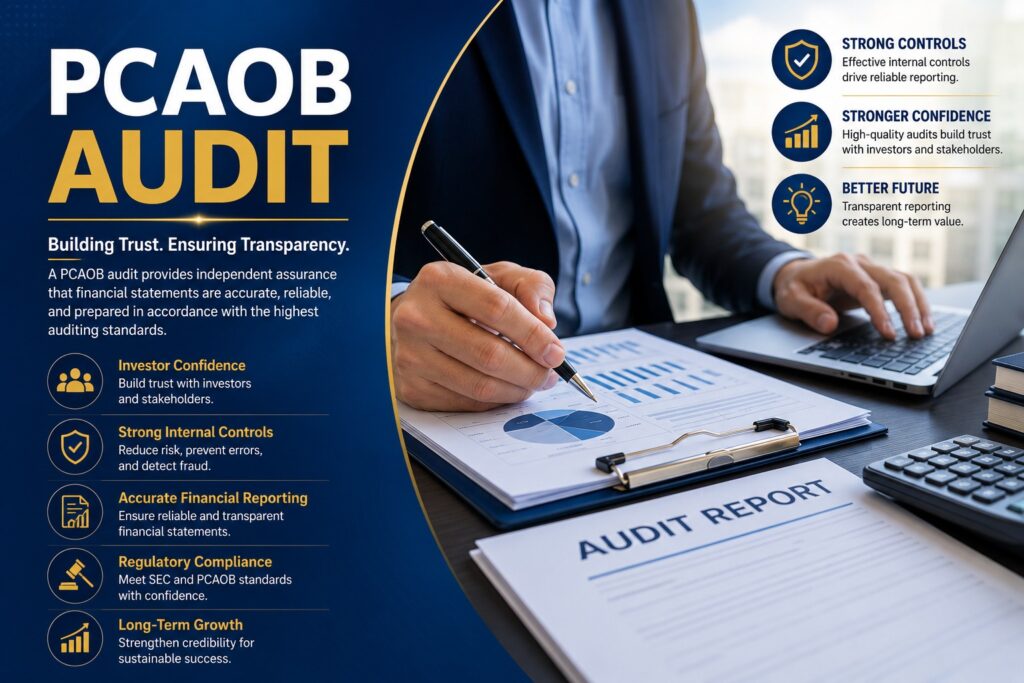
A PCAOB Audit is an independent audit performed in accordance with the standards established by the Public Company Accounting Oversight Board (PCAOB). These audits are primarily required for publicly traded companies and certain SEC-registered entities in the United States. The primary objective of a PCAOB audit is to ensure that a company’s financial statements are accurate, transparent, and prepared in accordance with applicable accounting standards. By maintaining rigorous auditing standards, the PCAOB helps protect investors, strengthen confidence in the capital markets, and improve the overall quality of financial reporting.
Why the PCAOB Was Established
The Public Company Accounting Oversight Board was established under the Sarbanes-Oxley Act of 2002 (SOX) in response to major corporate accounting scandals. Since then, the PCAOB has played a vital role in overseeing the audits of public companies and ensuring that audit firms maintain high standards of independence, integrity, and professional skepticism. Companies that comply with PCAOB standards demonstrate a strong commitment to financial transparency and corporate governance, which enhances their reputation among investors, lenders, and regulatory authorities.
What Does a PCAOB Audit Involve?
A PCAOB audit involves much more than simply verifying financial statements. Auditors perform a comprehensive assessment of the company’s financial reporting process, evaluate internal controls over financial reporting, identify areas of higher audit risk, and obtain sufficient evidence to support their audit opinion. They also review significant accounting estimates, revenue recognition practices, related-party transactions, and other complex financial areas that may have a material impact on the financial statements. Throughout the engagement, auditors maintain professional skepticism and evaluate whether the financial information fairly represents the company’s financial position.
Importance of Internal Control over Financial Reporting (ICFR)
One of the most significant aspects of a PCAOB audit is the evaluation of Internal Control over Financial Reporting (ICFR). Strong internal controls help organizations prevent errors, detect fraud, and ensure the reliability of financial information. Companies with well-designed internal controls are generally better prepared for audits, experience fewer audit findings, and demonstrate stronger compliance with regulatory requirements.
Common Challenges During a PCAOB Audit
Organizations often face several challenges during a PCAOB audit, including incomplete documentation, weak internal control processes, complex accounting transactions, evolving regulatory requirements, and inadequate financial reporting procedures. These challenges can lead to increased audit time, higher costs, and additional scrutiny from auditors. Preparing in advance by maintaining organized financial records, documenting accounting policies, performing regular reconciliations, and addressing internal control deficiencies can significantly improve the efficiency of the audit process.
How to Prepare for a Successful PCAOB Audit
A successful PCAOB audit requires continuous preparation rather than a last-minute effort. Businesses should regularly review their financial reporting processes, conduct internal risk assessments, strengthen governance practices, and ensure that supporting documentation is complete and accurate. Effective communication between management and auditors also plays a crucial role in resolving issues promptly and ensuring a smooth audit experience.
How Global Edge Elite CPA, PLLC Can Help
At Global Edge Elite CPA, PLLC, we understand the complexities of PCAOB auditing and the regulatory expectations that public companies face. Our experienced professionals provide audit readiness assessments, internal control evaluations, financial reporting support, and compliance advisory services to help businesses navigate PCAOB requirements with confidence. Whether your organization is preparing for an initial public offering (IPO), SEC reporting, or ongoing regulatory compliance, our team works closely with you to identify risks, strengthen internal controls, and support a successful audit process.
A PCAOB audit is more than a regulatory obligation—it is an opportunity to demonstrate financial integrity, strengthen investor confidence, and build long-term business credibility. By investing in strong governance, effective internal controls, and high-quality financial reporting, organizations can not only meet compliance requirements but also create a solid foundation for sustainable growth and success in the public markets.